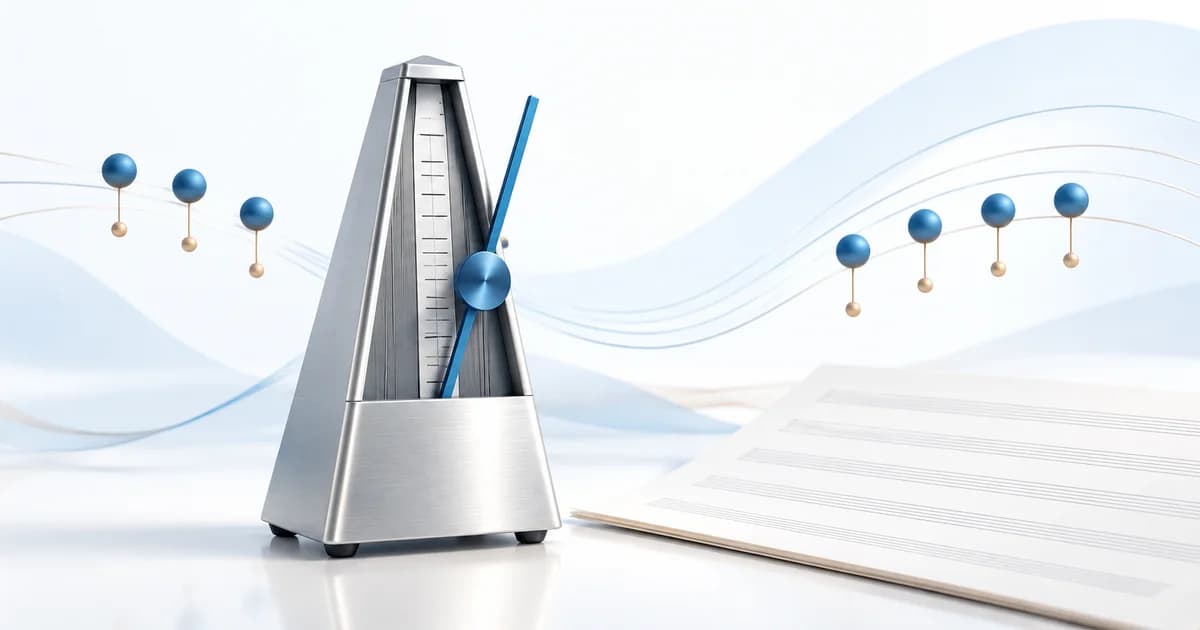
A metronome plays regular clicks to help you recognize and maintain a musical beat. Set it to a tempo in beats per minute (BPM), press Start, and practice so the notes you intend to place on each beat line up with the clicks. It is useful for guitar, piano, drums, vocals, and ensemble rehearsal. The secret is not to play faster immediately. Start with a tempo that allows clean, relaxed movement, listen to how your notes relate to the click, and raise the setting only when you can repeat the passage consistently.
Set Up Our Free Online Metronome
Open the BPM Metronome and choose a starting number, such as 60 BPM. Select 4/4 when practicing a standard four-beat bar, then press Start. Adjust the volume so the click is audible without overwhelming your instrument. On phones, the browser may require you to press Start before any sound plays; this is a normal audio-playback permission behavior.
At 60 BPM, there is one click per second. At 120 BPM, there are two each second. If 120 feels too quick for a new exercise, choose a slower value. A metronome is a reference, not an opponent; you should be able to listen to your own tone and movement while using it.
What Do the BPM Numbers Mean?
BPM specifies the rate of the beat. At 80 BPM, an interval between quarter-note clicks lasts 750 milliseconds. At 100 BPM, it lasts 600 milliseconds. At 120 BPM, it lasts 500 milliseconds. This simple relationship is why musicians can repeat a practice goal from day to day instead of guessing what “moderately fast” meant yesterday.
Classical sheet music may use Italian tempo words such as adagio, andante, allegro, and presto. Those terms describe character and broad speed rather than imposing one universal number. When a score provides an explicit metronome marking, pay attention to its note symbol as well as its BPM value; compound meter may use a dotted-quarter beat rather than a quarter-note beat.
Step 1: Find a Comfortable Starting Speed
Choose a short passage you can play correctly without a click. Set the metronome slower than your natural performance speed, then try to land the main notes on the designated beats. For a difficult scale or guitar pattern, the useful beginning might be 50 BPM; for a familiar groove, 90 BPM might already be relaxed. There is no universal beginner number.
Make accuracy your criterion. If you consistently miss a change or rush through the difficult part, lower the BPM. If the music remains comfortable for several repetitions, increase the setting by a small amount. Small increases make it easier to find the point where coordination begins to break down.
Step 2: Learn to Count in 4/4 and 3/4
In 4/4, count “ONE two three four” and repeat. The first beat is commonly emphasized in metronome settings that accent bar beginnings. The time signature tells you how many quarter-note beat units occupy the bar, not how many clicks occur in an entire minute. If each quarter note takes half a second at 120 BPM, a four-beat bar lasts two seconds.
In 3/4, count “ONE two three.” The regular click can be the same speed as 4/4, but the emphasized bar beginning repeats after three beats instead of four. This helps with waltz-like phrases and other triple-meter music. For 6/8, the musical feel may group eighth notes into two large dotted-quarter beats, so avoid treating every meter as a simple count of quarter notes.
Step 3: Practice Subdivisions Between Clicks
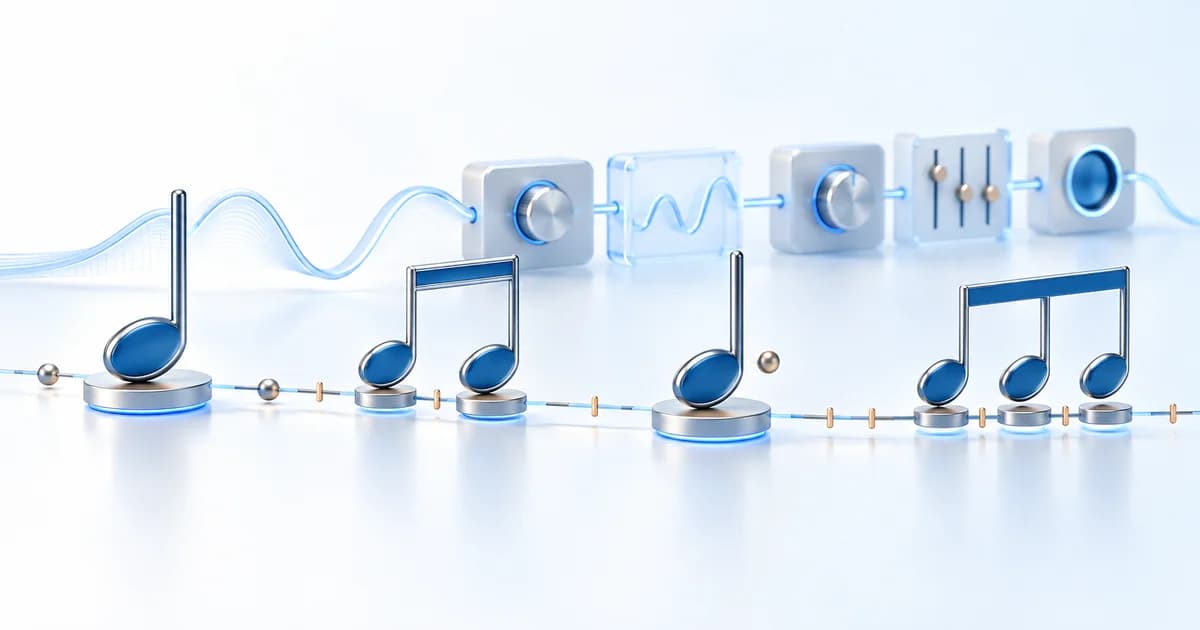
A beginner often wants the metronome to click on every note. Instead, learn to hear smaller note values between a steady beat. At 60 BPM, play a quarter note on each click. Then play two eighth notes per click, evenly dividing the second. Finally, try four sixteenth notes per click. The metronome stays at 60 BPM throughout; your note density changes.
Count “one-and-two-and” for eighth notes or “one-e-and-a” for sixteenths if that helps. Keep your shoulders and hands relaxed. If the subdivisions become uneven, return to quarters and rebuild the pattern rather than increasing speed.
Step 4: Increase Tempo Without Losing Control
Play a phrase three times in a row at a comfortable BPM. If timing, tone, and movement stay consistent, raise the tempo by three to five BPM and repeat. If errors return, drop back to the last clean setting and focus on the troublesome measure. This graduated approach is usually more productive than jumping directly from 60 to 120 BPM.
You can practice with different increments; the exact step is less important than the quality of repetitions. Keep a log containing the passage, date, clean tempo, and problem areas. Over several practice sessions, the log makes improvement visible without encouraging careless rushing.
Metronome Exercises for Guitar, Piano, and Drums
Guitar: alternate downstrokes and upstrokes while keeping the picking hand steady; then move between two chords every four beats. Piano: play a short five-note pattern with even notes, first with each hand separately and then together. Drums: maintain a consistent hi-hat pulse and deliberately place kick and snare hits against the click. A musician in any discipline can benefit from clapping, speaking, or walking to the beat before adding difficult instrument movements.
A useful advanced exercise is to make the click sparser, for example imagining the click only on beats two and four rather than every quarter note. You must then maintain the missing beats internally. This exercise trains independent timekeeping, but save it until you can stay reliably aligned with the regular click.
What If You Keep Rushing or Dragging?
Record a short exercise and listen back with the click. If the notes increasingly arrive before it, you are rushing; if they arrive later, you are dragging. Sometimes players rush only a technical transition and correct afterward, hiding the issue during casual listening. Isolate that transition at a slower BPM and build evenness before returning to the whole phrase.
The goal is not to erase all expression. After practicing precise timing, turn off the metronome and play musically. Then switch it on again to see whether your underlying pulse remains dependable. A strong player can maintain time and also use intentional expressive timing when the performance calls for it.
Set a Metronome to Match a Song
When learning a recording, estimate its tempo with the BPM Finder from a local file or Tap Tempo while listening. Start the metronome at the proposed number and compare several bars. If the beat consistently drifts, adjust the value slightly. If a 70 BPM reading feels wrong, try the 140 BPM alternative and decide which metrical level suits the practice task.
A stable click is most helpful with music that follows a steady beat. Live recordings and expressive classical performances may vary; forcing them to a rigid click can make them sound unnatural. In those cases, use the metronome for isolated technical practice rather than expecting it to follow every phrase of the recording.
Frequently Asked Questions
What BPM should a beginner practice at?
Start at whatever BPM allows the passage to be accurate and relaxed. For some exercises that is 50–60 BPM; for others it is much higher. Clean repetitions matter more than reaching a particular number.
What is the difference between 3/4 and 4/4 on a metronome?
The beat rate can stay the same, but the bar grouping changes. In 3/4 the accent pattern repeats after three quarter-note beats; in 4/4 it repeats after four.
Should a metronome click on every note?
Usually not. The click can mark the main beat while your playing uses subdivisions or longer note values. Learning to place notes between clicks strengthens timing awareness.
Can a metronome improve rhythm if I already know the song?
Yes. It can expose subtle rushing, dragging, and uneven subdivisions, especially in repeated passages or challenging transitions. Record yourself occasionally for a more objective check.
Is practicing without a metronome ever useful?
Yes. Switching between click-based practice and expressive performance is valuable. A metronome builds reliable internal time; musical interpretation determines when and how to shape that time.
Continue with: Online BPM Metronome, what BPM means, and how to find song tempo.